Engine Bay Cleaning with Dry Ice — Everything You Need to Know
How dry ice engine bay cleaning works, what it costs, what to expect, and why it's better than steam or chemical cleaning for daily drivers and concours alike.
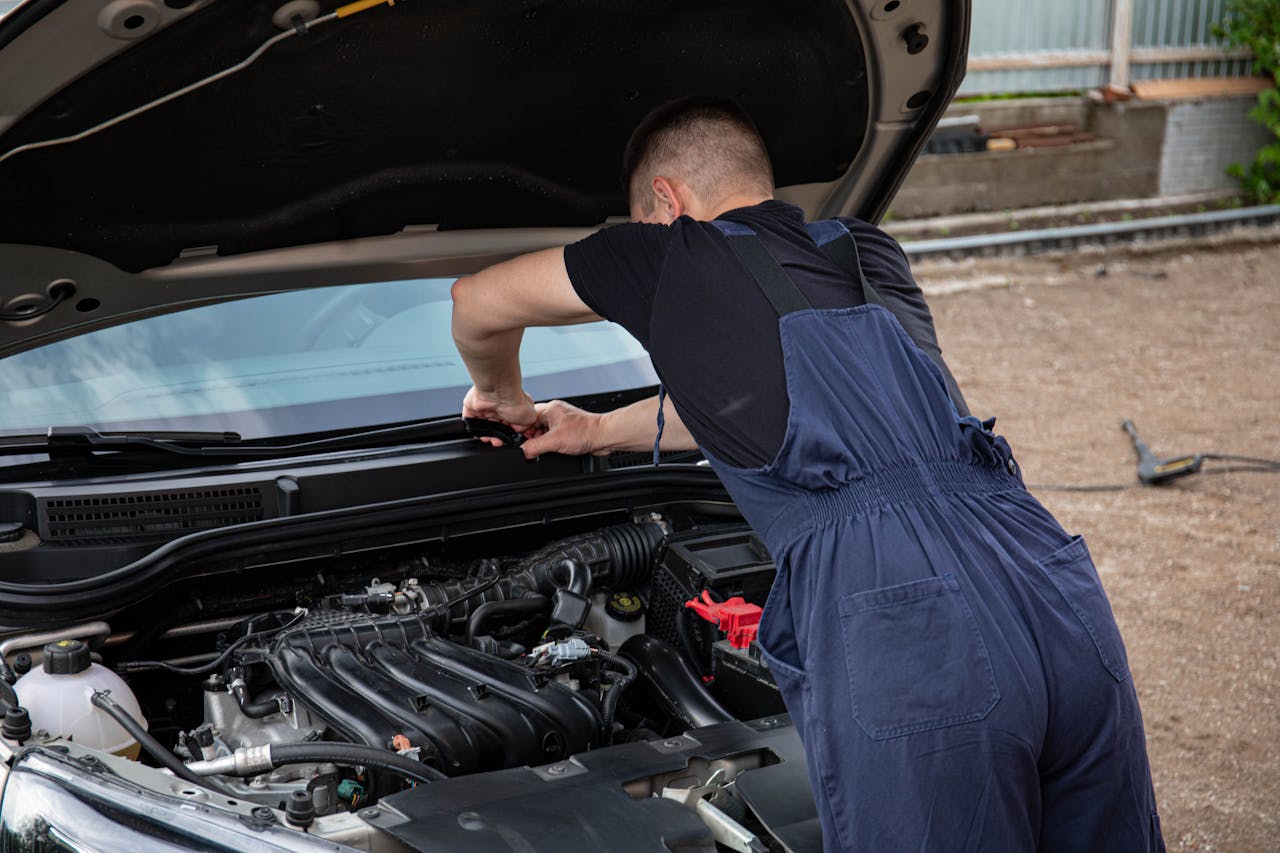
Engine bay cleaning is the highest-volume single service we deliver. Daily drivers, classics, race cars, restoration projects — they all benefit from dry ice cleaning for the same reason: it’s the only cleaning method that doesn’t leave water or chemistry behind in a place where you really don’t want either.
This guide walks through what dry ice engine bay cleaning actually is, what to expect, what it costs, and why steam cleaning and chemical degreasing aren’t the right answer for an engine bay even though they look cheaper on paper.
What you get
A clean engine bay. Specifically:
- Plastic loom covers, intake plenums and air boxes back to factory finish
- Alloy castings (block, head, intake) clean of oil mist and road grime
- Hoses and wiring clean without rubber dehydration
- Original factory decals, VIN tags and serial markings intact
- The bay smelling of nothing, with no water in any cavity
Optional add-ons we usually offer:
- Hand polish on alloy castings
- Plastic dressing on loom covers
- Detail of windshield wiper arms, struts and other peripheral metalwork visible from the bay
- Cavity wax on chassis rails (restoration projects)
What happens during the job
A typical engine bay job looks like this:
1. Pre-inspection (15–20 min). The bay is photographed before any work starts. We identify:
- Sensitive sensors (MAF, MAP, O₂) for masking
- Air intake — masked to prevent particulate entry
- Original decals to preserve
- Existing damage to document (cracked plastic, oil leaks) so they’re not attributed to us
2. Masking and prep (10–15 min). Plastic and tape over the air intake and any electrical connector that’s accessible without disconnection. Ground sheet under the engine bay to capture loose contamination. Vehicle on flat hard standing — no need for a hoist for engine bay-only work.
3. Cleaning (1.5–3 hours). Pellet feed at 80–110 PSI typically, working from the back of the bay forward. Coverage pattern is methodical — every surface gets attention, including the chassis rails, the firewall, the inside of the bonnet, and the hard-to-reach corners (where conventional detailing always misses).
4. Vacuum and finish (15–20 min). Loose contamination is HEPA-vacuumed. Any add-ons (hand polish, plastic dressing) applied. Final walk-around photography.
5. Walk-through (10 min). You inspect the bay before we leave. Anything you want re-done gets re-done.
Total time: 2–4 hours for most jobs. Premium / concours work runs longer.
Why not steam cleaning?
Steam cleaning the engine bay introduces water. That sounds obvious, but the consequences are not:
- Water gets into electrical connectors. ECU plugs, MAF connectors, ignition coil leads. Modern cars have sealed connectors but not perfect ones. Water inside a connector creates a high-resistance path that often isn’t a problem until weeks later, when you start chasing intermittent fault codes.
- Water in the looms. Wiring looms have water-resistant outer sheathing but the bundles inside aren’t water-tight. Water wicks along the loom and pools at the lowest point — usually in or near a connector.
- Water in the air intake. Cleaning the engine bay with the bonnet up means water drift onto the air filter and into the intake plumbing.
- Drying is never complete. The bay looks dry. The connector inside the chassis rail does not.
The cost of fixing a moisture-related electrical fault months later — chasing an intermittent CEL, replacing a sensor that’s gone high-resistance — wipes out the savings of cheaper cleaning. We see two or three of these every month from people who pressure-washed their bay.
Why not chemical degreasing?
Three reasons:
- Residue. Degreaser leaves a film. The film traps new dirt. Two months later the bay is filthier than before.
- Streaking. Plastic loom covers and painted plenums streak under chemical cleaning. Concours cars don’t get presented with streaky plenums.
- Run-off. Degreaser run-off into your driveway or garage drain isn’t great for the environment and isn’t legal in commercial settings.
Cost on the Central Coast / Sydney / Newcastle
For a typical Central Coast, Sydney or Newcastle postcode:
- Daily driver, light condition: $480–$580
- Daily driver, moderate condition: $580–$780
- Daily driver, heavy condition: $780–$950
- Premium marque (Porsche, Ferrari, etc.) — add 25%
- Concours preparation — usually upper end of range, sometimes premium tier
- Travel surcharge: $0 within 30km of a hub, $75 for 30–60km
Open the quote form for a postcode-specific estimate.
When to do it
Reasons customers typically want an engine bay clean:
- Pre-sale presentation. Buyer’s first impression. A clean bay communicates a maintained car.
- Concours and car shows. Show standards demand it.
- Pre-purchase inspection clean. Easier to spot leaks, weld defects and missing components when the bay isn’t filthy.
- Post-incident. Coolant spray, oil leak, anything that’s left a mess.
- Restoration projects. As one step in a broader full-vehicle clean.
- “Just because.” A clean engine bay is a satisfying thing to look at.
What to expect from us
When you book, we’ll ask:
- Vehicle make, model and year
- Postcode
- Photos of the bay (optional — helps us scope condition accurately)
- Add-ons you want (polish, dressing, etc.)
- Timeline
We come back with a fixed quote within 24 hours. On the day, we arrive on time, work to the standard above, and walk you through before leaving.
How to book
Send a brief and we’ll come back with a fixed quote within 24 hours.
If you’d rather just talk to someone, call us during business hours.