Electrical & Critical Equipment Cleaning
De-energised switchgear, motor and panel cleaning — no water, no solvent, no drying time.
De-energised switchgear, motor and panel cleaning — no water, no solvent, no drying time.
Electrical equipment fails when dust, lint, oil mist and contaminants build up on insulation, terminals and cooling fins. Conventional cleaning needs a long shutdown, and water or solvent introduces risk to insulation and adds drying time before re-energisation. We only clean equipment your licensed electrical worker has isolated and proven de-energised, with our own lock and tag on the isolation point. Dry ice is non-conductive, non-abrasive and leaves no residue — no drying time, so your shutdown window is shorter, not eliminated.
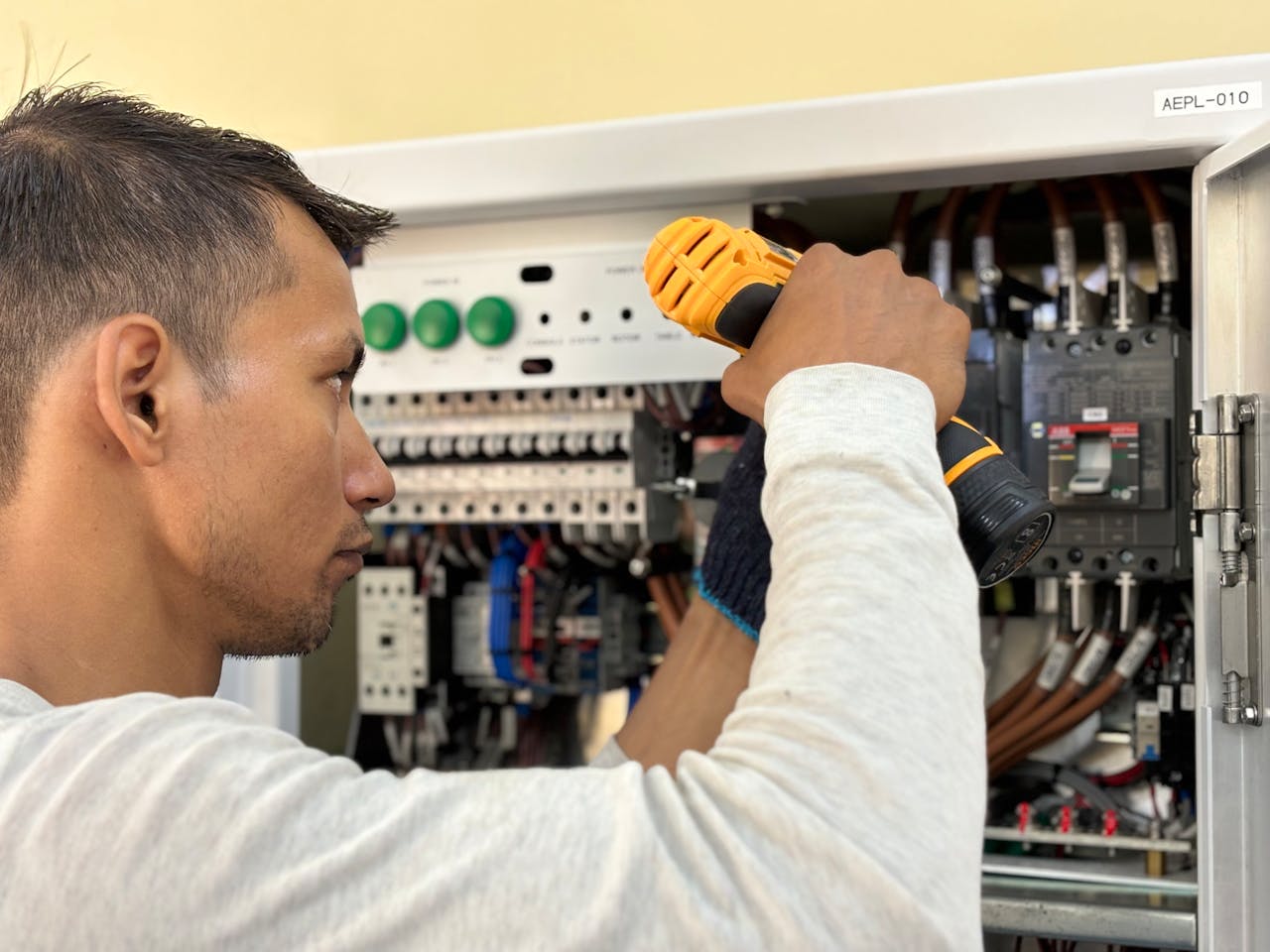
Stock imagery for now — we'll replace with own-job photography as we deliver work through 2026.
What you can expect
- MV/HV switchgear (de-energised)
- Motors & generators (de-energised)
- Distribution panels (de-energised)
- Transformers (de-energised)
- Data-centre equipment (isolated/powered down)
- PLC cabinets (de-energised)
Why dry ice for electrical equipment cleaning
Non-conductive media, no residue
CO₂ pellets leave no conductive residue and need no drying time before re-energisation — but we only blast isolated, proven-dead equipment.
No moisture into insulation
Insulation resistance preserved; no risk of post-cleaning failures.
Cooler running, longer life
Clean cooling fins and ventilation paths reduce operating temperatures and extend insulation life.
Compliance documentation
Per-asset photo record, IR readings before/after where requested.
How a typical electrical equipment cleaning job runs
- 1
Isolation permit & risk assessment
Written isolation/LOTO permit from your licensed electrical worker, agreed with your electrical authority. No permit, no blasting.
- 2
IR baseline
Insulation resistance recorded before cleaning where applicable.
- 3
Targeted blast
Pellets directed across windings, fins, busbars; dwell adjusted per surface.
- 4
Verification
Post-cleaning IR test by your electrician, visual inspection, sign-off documentation, before re-energisation.
Surfaces & limits
Where this service works well — and the situations we'll flag for repair instead of cleaning.
- Steel & aluminium enclosures
- Copper busbars
- Motor windings
- PCB-housed control cards (de-energised)
- Cooling fins & heatsinks
- Energised equipment of any kind — isolation and a proving-dead certificate are required first
- Equipment with active arcing faults — repair first
Typical price for electrical equipment cleaning
Production lines, marine vessels, restoration zones, multi-day commercial work.
Final price depends on condition, scope and travel. Use the quote form for a postcode-specific estimate.
Get exact estimateService-specific FAQs
Can equipment really be cleaned live?
No. We only clean equipment that has been isolated and proven de-energised by a licensed electrical worker, with our own lock and tag on the isolation point. If the client will not shut down, we decline the work. What dry ice does is make that shutdown window short — no water, no solvent, no drying time.
How is this safer than compressed air?
Compressed air drives contaminants deeper. Dry ice removes them and produces less abrasive damage on insulation.
Do you handle MV switchgear?
Yes, once isolated and proven dead. We work alongside your asset owner’s safety case and high-voltage operators throughout the isolation and testing process.
Related services
Manufacturing Equipment Cleaning
In-place cleaning of presses, moulds, robots and production cells — no tear-down required.
Water Damage Equipment Recovery
Recover machinery, motors and panels after flooding without further moisture damage.
Tank & Vessel Cleaning
Process vessel cleaning without confined-space water lances or hazardous solvent.
Ready for a electrical equipment cleaning quote?
Send a brief for an instant range, or send us a quick brief and we'll come back within 24 hours with a fixed quote.
Or talk to us directly
- 02 5302 6367
- office@dryiceblasters.com.au
- Mon–Fri 7am–6pm · Sat 8am–2pm · Sun by appointment