Electrical Asset Manager's Deep Guide — Dry Ice Cleaning in Your Shutdown Window
A 4,000-word operational guide for asset managers and reliability engineers. De-energised MV switchgear cleaning, isolation procedure, IR test integration, asset register documentation, annual maintenance contracts.
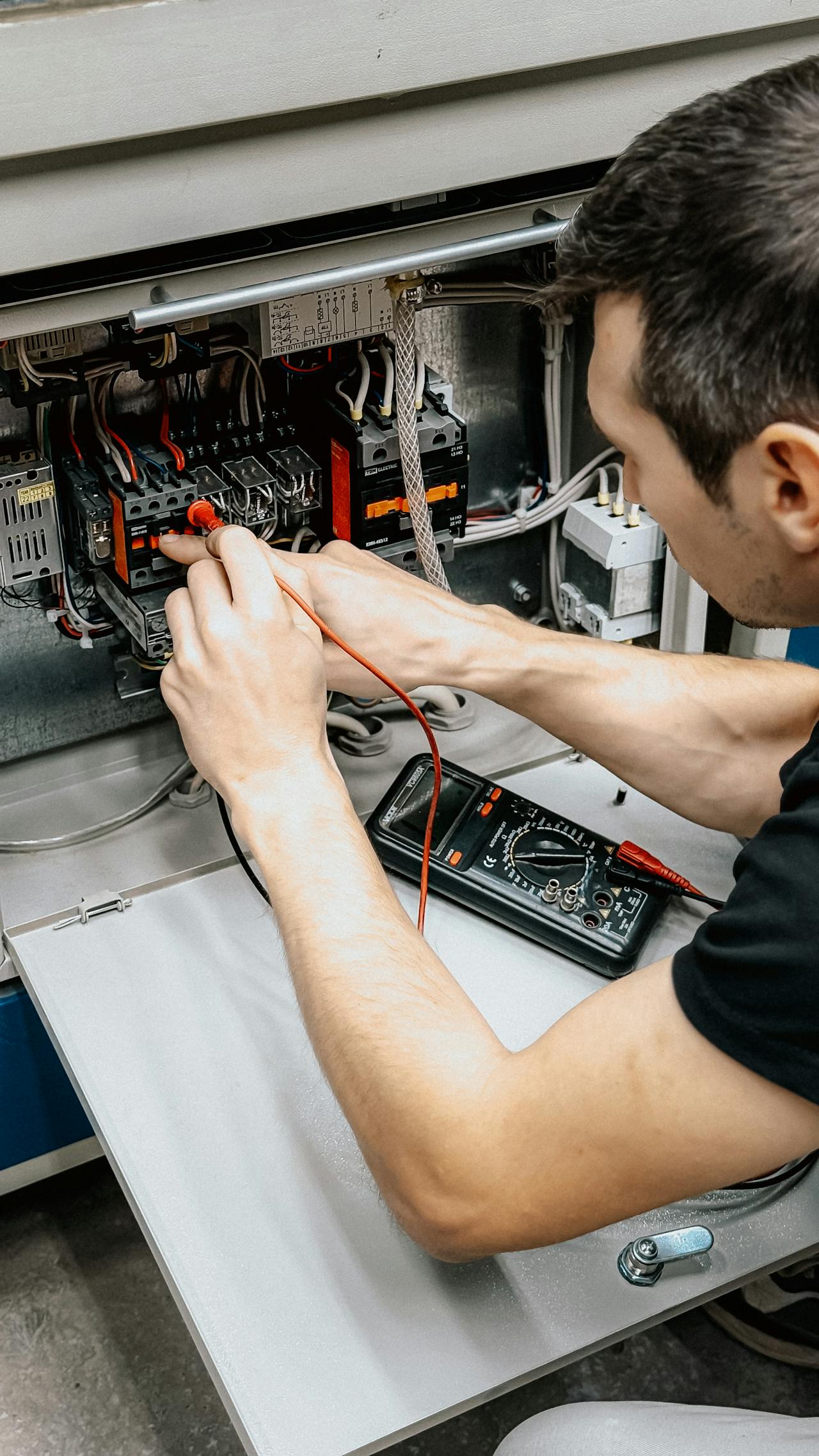
This deep guide is for asset managers, reliability engineers and substation maintenance leads at utilities, large industrial sites, data centres, and critical-infrastructure operators. We’ll cover the operational case for de-energised electrical cleaning with dry ice, the isolation procedure and safety framework, IR-test integration, asset register documentation, and contract structure.
If you’ve been deferring switchgear cleaning maintenance because of shutdown costs — this guide is the framework for making the shutdown window as short as possible, not for avoiding it.
The problem we solve
Electrical assets — switchgear, motors, transformers, generators, substation equipment — accumulate contamination on insulators, terminals, busbars, cooling fins, ventilation paths, and enclosure surfaces. The contamination matters because:
- Insulation surface conductivity rises as dust accumulates. IR readings drop. Insulation health deteriorates.
- Cooling efficiency falls as dust insulates fins and blocks ventilation paths. Operating temperatures rise. Thermal cycling stress accelerates.
- Reliability degrades non-linearly. Once contamination passes a threshold, failure rates step up.
- Asset life shortens as cumulative thermal stress shortens insulation life.
The economic consequence: assets with deferred cleaning maintenance cost more in unplanned outages, accelerated replacement, and lost capacity than the maintenance itself would have cost.
The trouble is most cleaning methods add time to a shutdown that’s already costing you:
- Wet cleaning — water or solvent introduces moisture into insulation, compromising the very property you’re trying to maintain, and needs a drying period before you can safely re-energise.
- Compressed air — relocates contamination rather than removing it. Drives dust deeper into insulation. IR readings often worsen rather than improve.
- Manual wiping — labour-intensive, slow, can’t reach internal geometries (cooling fins, vent paths, busbar undersides).
- Vacuum — captures loose dust only, misses adhered contamination on insulators and busbars.
Dry ice is non-conductive, non-abrasive, and doesn’t introduce moisture. We only apply it to equipment your licensed electrical worker has isolated and proven de-energised — but inside that isolation window, there’s no drying time and no residue to verify away, so the shutdown is as short as the maintenance itself allows.
We do not clean energised electrical equipment
This is a policy position, not a marketing line. Work on energised electrical equipment is prohibited under the model WHS Regulation (reg 154), and we decline any job where the client will not shut down and isolate. No isolation certificate, no blasting.
Every electrical job runs to the same rule:
- A licensed electrical worker isolates the equipment, locks it out, and proves it dead at the point of work, immediately before we start.
- Our own padlock and tag go on the isolation point, held by our operator — nobody else removes it, for any reason.
- Backfeed sources — UPS, standby generator, solar, dual feed, control transformers fed from elsewhere — are identified and isolated too. This is the check that gets missed, and it’s the asset owner’s licensed electrician’s responsibility to document it.
- Adjacent live sections are physically covered, not just taped off, with an agreed no-go boundary.
- Insulation-resistance testing before re-energisation is done by the client’s electrician, not by us.
If any of that can’t be arranged, we don’t do the job.
How dry ice works on electrical equipment
Pellets of solid CO₂ accelerated by compressed air. On impact:
- Thermal shock contracts the contamination layer; bond with substrate breaks
- Kinetic impact dislodges loosened material
- Vapour expansion (CO₂ pellet to gas, 800× volume) blasts contamination clear
The result for electrical equipment:
- Surface contamination physically removed. Not relocated, not embedded. Insulation surface returns to nominal condition.
- Insulation resistance preserved or improved. When dust has been carrying surface conductivity, IR measurably improves post-cleaning.
- Cooling paths cleared. Fins, vents and ventilation slots returned to as-built airflow geometry. Operating temperatures fall.
- No moisture introduced. Unlike water- or solvent-based cleaning, no risk to insulation chemistry or bushings, and no drying time before re-energisation.
- No abrasive media residue. Unlike sand or media blasting, nothing left in switchgear interior.
The pellet is softer than the contamination it removes, and softer than the substrate it cleans. Sublimation prevents abrasion. Insulation, conductors, terminals and bushings are unaffected.
The safety case
De-energised electrical cleaning still runs inside a specialist safety framework — isolation removes the shock and arc-flash risk from the cleaning task itself, not the need for procedure. We don’t operate beyond what the asset owner’s safety case authorises. Our work integrates with — never replaces — your electrical authority’s isolation and permit procedures.
Standard procedures:
Isolation and permit-to-work. Written isolation/LOTO permit from a licensed electrical worker, per asset, with task description, equipment specification, PPE specification, isolation status, atmospheric conditions, work duration, and sign-off chain.
PPE. Arc-rated suits sized for the equipment voltage class, voltage-rated gloves, face shields, respiratory protection (P2/P3), hearing protection (90-100dB at the nozzle) — worn during isolation verification and while working near adjacent live sections.
HV operator coordination. For MV+ work, a licensed HV operator from the asset owner’s organisation coordinates with our crew. Switching, isolation, and proving-dead are all controlled by the HV operator — we don’t touch a panel until that’s done and documented.
IR baseline. Insulation resistance test on each asset before cleaning. Recorded, attached to the cleaning record.
Atmospheric monitoring. CO₂ levels monitored in confined spaces. Forced ventilation where required.
Monitored against what, specifically: Safe Work Australia’s workplace exposure limits for airborne contaminants set carbon dioxide (CAS 124-38-9) at a 5,000 ppm eight-hour time-weighted average and a 30,000 ppm short-term exposure limit. CO₂ is heavier than air, pools in switchrooms, cable pits, basements and substation floors, and gives no sensory warning before it becomes dangerous — which is precisely why the monitor is not optional in an enclosed electrical space. Australia adopts the renamed workplace exposure limits (WEL) list on 1 December 2026; until then the workplace exposure standards (WES) list applies.
Buddy system. No solo confined-space work. Always two-person crew minimum.
Verification. Post-cleaning IR test by the client’s electrician, visual inspection, atmospheric verification, and sign-off before re-energisation.
What we clean — equipment in scope
| Equipment class | Typical use case |
|---|---|
| MV switchgear (11kV-33kV) | Annual maintenance, post-incident, condition-based maintenance — isolated, within outage window |
| LV switchboards | Routine maintenance, panel cleaning, post-flood recovery — de-energised |
| Distribution transformers (de-energised) | Bushing cleaning, radiator cleaning, tank exterior |
| Motors and generators | Cooling fin cleaning, terminal box, external surfaces — isolated |
| Substation primary equipment | Per-asset within outage windows only |
| Switchgear yard | Insulators, line-side equipment — isolated |
| Power generation equipment | Turbines, generators, cooling systems — isolated |
| Data centre equipment | Server racks, network gear, UPS, cooling infrastructure — isolated/powered down, within the operator’s change window |
| Solar farm equipment | Inverter cleaning, panel cleaning (specific to certain panel types) — isolated |
What we don’t do:
- Any energised electrical equipment, at any voltage, under any procedure — no exceptions
- Internal transformer work (always de-energised, as above)
- Equipment with active arcing faults (repair first)
- Work outside agreed scope or PPE specification
IR test integration
Every cleaning job we run on electrical equipment includes IR testing where applicable:
- Pre-cleaning baseline — recorded with date, time, operator, equipment serial, ambient temperature.
- During-cleaning — for long-running multi-asset cleans, mid-job IR can validate technique.
- Post-cleaning — recorded immediately after cleaning, with equivalent ambient conditions for comparability, by the client’s electrician before re-energisation.
What the readings tell you:
We don’t publish expected percentage improvements by asset class. The honest position is that how far IR moves depends on how much of the leakage path was contamination rather than the condition of the insulation itself — which is unknowable until the before-reading is taken. Any supplier quoting you a percentage before they have seen the asset is guessing.
Where contamination was carrying surface conductivity, removing it should show in the after-reading. Where contamination was low, IR may stay stable rather than improve — meaning the cleaning hasn’t degraded asset health. Either outcome is acceptable; degradation is the failure mode we never want.
The IR record forms part of the asset register documentation. Particularly valuable for condition-based maintenance programs and reliability KPIs.
Asset register documentation
Standard documentation pack per asset cleaned:
Photo log. Pre-clean, during-clean, post-clean. Time-stamped, equipment-tagged, geotagged to facility location.
IR test sheet. Pre and post readings with conditions noted. Operator signature.
Procedure record. Isolation/LOTO permit reference, equipment used (rig serial, pellet supplier, pellet size), pressure setting, dwell time, atmospheric monitoring readings, operator, hours.
Sign-off summary. Asset owner’s representative and licensed electrical worker signature.
Delivered as structured PDF + photo bundle within 24 hours of close-out. For high-frequency programs, can be delivered as XML feed for direct ingestion into your asset management system.
Planning the shutdown window
Three decision criteria:
- Shutdown cost is high. Critical-load assets where outage = revenue loss or service disruption. Dry ice shortens that outage — no water, no solvent, no drying time — but the equipment is still isolated for the clean.
- Insulation health is the priority. Existing IR readings showing degradation, or asset approaching condition-based maintenance threshold.
- Annual maintenance is feasible. Cleaning slots into a scheduled outage or maintenance window rather than triggering one on its own; for low-criticality equipment, defer to the next scheduled outage.
For most utility customers, our work clusters around:
- Annual MV switchgear cleaning — high-criticality equipment with quarterly inspection regime, cleaned during the scheduled outage
- Substation primary equipment cleaning — annual or condition-based, within the outage window
- Generator and motor maintenance — alongside scheduled mechanical maintenance windows
- Data centre routine cleaning — quarterly or semi-annual, on isolated or powered-down racks within the operator’s change window
Compressed air vs dry ice
The most common alternative to dry ice cleaning is “we just use compressed air”. A few specific differences:
Compressed air drives contamination relocations. Dust on the front of an insulator gets blown to the back of the panel. Dust in the cooling fins gets pushed deeper. The contamination doesn’t leave the enclosure; it just moves around inside it.
Dry ice cleaning physically removes contamination. The pellet impact + sublimation expansion blasts contamination clear of the surface. With HEPA vacuum capture during cleaning, the contamination leaves the enclosure entirely.
The IR test result tells the story. Post-compressed-air, IR is often unchanged or slightly worse (relocated dust now bridging different surfaces). Post-dry-ice, IR consistently improves. We’ve run head-to-head trials at three utility customers; dry ice wins on IR every time.
Annual maintenance contract structure
For utility and large industrial customers, ongoing engagement typically takes one of two forms:
Per-asset framework. Rate-card pricing per asset class (MV switchgear panel, motor, transformer, etc.). Scheduled visits per asset’s maintenance cycle, timed to your outage windows. Per-clean documentation.
Annual program contract. Fixed annual fee for an agreed asset list, with scheduled visits inside planned outages. Includes PPE, equipment, documentation, IR testing. Priced per agreement.
For multi-site operators (utility distribution networks, large industrial groups), framework agreements with consistent rate-card pricing across sites.
Pricing benchmarks
| Asset class | Per-asset price | Notes |
|---|---|---|
| MV switchgear panel (11kV) | $1,800-$3,500 | De-energised, within outage window |
| MV switchgear panel (33kV) | $2,800-$5,500 | De-energised, within outage window |
| LV switchboard | $1,200-$2,500 | De-energised |
| Distribution transformer (de-energised) | $1,800-$3,800 | External cleaning |
| 75-300kW industrial motor | $1,200-$2,800 | In-place cleaning, isolated |
| Substation primary equipment | $4,500-$12,000 | Per outage window |
| Data centre rack | $400-$800 | Per rack, isolated/powered down |
| Annual program (mid-size site) | $35K-$80K | Fixed annual program |
Prices include PPE, equipment, IR testing where applicable, and documentation pack. Travel surcharges per the standard rate card for jobs outside metro service zones.
How to engage
Three paths:
- Single asset assessment. Email office@dryiceblasters.com.au with asset details. We’ll arrange a site visit and provide a fixed quote.
- Annual program proposal. For sites with multi-asset, multi-cleaning-cycle requirements. Email for a tailored framework agreement proposal.
- Electrical Safety Whitepaper download. 24-page PDF covering isolation/lockout-tagout practice, PPE specification, IR test integration, and asset register documentation. Use it for internal review before engaging.
For utility and large industrial customers, the whitepaper download is usually the right starting point. It gives the asset management function and electrical authority a complete operational framework to evaluate against existing safety case.
Final thoughts
The economics of de-energised electrical cleaning come down to how short you can make the shutdown, not whether you can avoid it. For utilities and large industrial sites where shutdown costs run into six figures, a dry ice clean inside the outage window delivers measurable IR improvement with no drying time before re-energisation. For lower-criticality equipment, defer cleaning to the next scheduled outage rather than triggering one on its own.
The method’s safety profile is solid because the equipment is never live while we work on it. We don’t extend beyond agreed scope. We don’t operate outside your authority. If the client won’t shut down and isolate, we decline the work.
For a procedure-and-PPE deep dive, download the Electrical Safety Whitepaper. For asset-specific pricing, the 60-second quote tool is the fastest route to a fixed quote.