Bakery Tunnel Oven — Hot-Clean Allergen Changeover
A worked example of how a dry-ice allergen changeover on a tunnel-oven bakery line would run, and how the method compares with a chemical clean. Illustrative, not a completed job.
A worked example of how a dry-ice allergen changeover on a tunnel-oven bakery line would run, and how the method compares with a chemical clean. Illustrative, not a completed job.
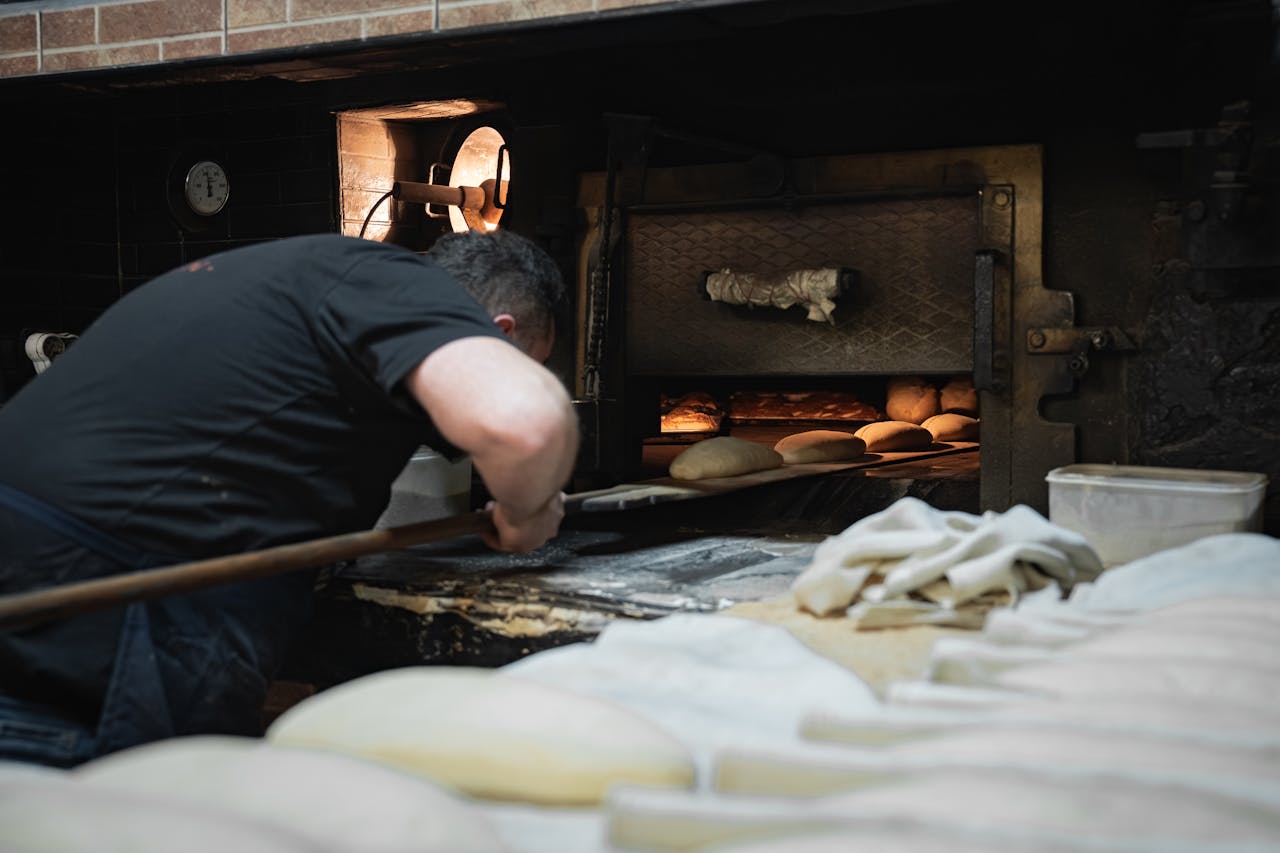
The scenario
Picture a specialist bakery running three product lines on a single 32-metre tunnel oven. Two of the lines share a major allergen (egg) and the third is allergen-free. Each switch from the egg-containing products to the allergen-free product requires a validated allergen changeover — including a full sanitation cycle on the oven, conveyor and downstream packaging machinery.
A chemical-based process for this kind of changeover typically looks like: cool the oven, apply alkaline cleaner and let it dwell, rinse, wait for the clean to dry, warm the oven back up, validate with ATP swabs, then restart. Modelled on a 12-hour chemical changeover as a worked example; actual times vary by product, equipment and allergen.
That kind of round trip costs a shift each time, which is exactly the pressure point a dry-ice-based alternative is meant to address.
How the work would run
Phase 1 — Trial. A first step would be a single trial cycle on a planned changeover, with the existing chemical clean running in parallel as a fallback. The dry-ice clean would be scoped to: oven walls, bake plates, conveyor belt, oven exit zone, packaging filler. ATP swabs would be taken from the same locations as the existing protocol.
The dry-ice cycle can run while the oven is still hot — well below operating temperature, but with no cool-down required. That’s the structural reason a dry-ice changeover can be materially quicker than a full cool-clean-reheat chemical cycle. How much quicker depends on the plant, and only its own trial establishes it.
Phase 2 — Validation. QA would write the procedure, run swab studies over several changeovers, and get sign-off from the food safety lead before the process is added to the HACCP plan.
Phase 3 — Production cadence. Once the procedure is in the HACCP plan, dry-ice changeovers would slot into the weekly schedule at whatever cycle time the site’s own validation established.
What a plant in this position typically weighs up
- Cleaning time: a dry-ice cycle skips the cool-down and reheat legs of a chemical clean, which is the largest structural time saving — but the actual number only comes from that plant’s own trial and validation, not from an industry average.
- Chemical inventory: dry ice uses no cleaning chemical for the surfaces it treats.
- Water usage: no water is used on the treated surfaces during the dry-ice pass itself.
- Operator exposure: no alkaline-cleaner handling near hot equipment during the dry-ice pass.
One genuinely published anchor worth citing here, with its scope kept narrow: Cold Jet’s published customer testimonials report that “cleaning the bread cooler and mile long conveyor, which had required 5-25 labourers, 8-10 hours, now takes two people less than six hours” (Cold Jet, food & beverage industry page), and separately that a customer “cut labour from four workers to two and cut time needed to clean from a day and a half to four to six hours” cleaning elevators (Cold Jet blog). Both are single-equipment-type case reports from Cold Jet’s own customers, not allergen-changeover averages, and they should not be read as a benchmark for this scenario’s tunnel-oven changeover specifically.
The trial-then-contract structure — a single trial cycle running in parallel with the existing chemical clean as fallback, then several changeovers of swab validation before any HACCP plan amendment — is how we’d approach a bakery/oven job in this category. Validation-first is non-negotiable for food-safety regulated production, and any time saving a specific plant achieves needs to come from its own measured trial, not a quoted industry figure.
Want similar work for your project?
Tell us what you need cleaned. We come back with a fixed quote within 24 hours — and an exact estimate range while you wait.
Or talk to us directly
- 02 5302 6367
- office@dryiceblasters.com.au
- Mon–Fri 7am–6pm · Sat 8am–2pm · Sun by appointment
About this scenario. Dry Ice Blasters launched in 2026. This piece illustrates how a typical conveyor & oven cleaning job runs — drawn from industry-standard work patterns, our team's prior operator experience and equipment specs. Process, scope and outcomes reflect what you can expect when you book us. Documented customer jobs are marked "Case study" on the projects page.