Insurance Warehouse Fire Restoration — Recovering Timber Framing
A worked example of how a dry-ice clean could recover soot-damaged timber framing on a large warehouse fire claim, as an alternative to full structural replacement. Illustrative, not a completed job.
A worked example of how a dry-ice clean could recover soot-damaged timber framing on a large warehouse fire claim, as an alternative to full structural replacement. Illustrative, not a completed job.
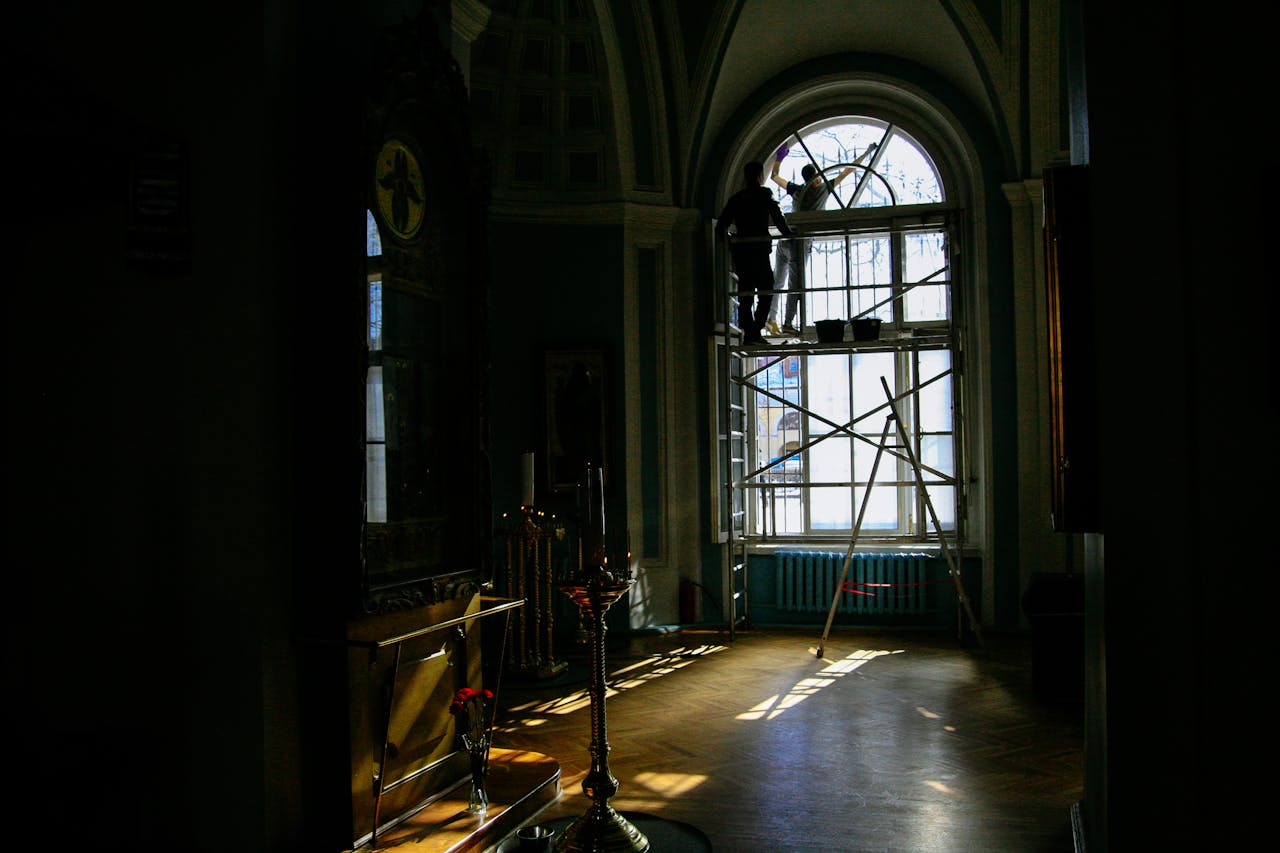
The scenario
A scenario this category sees regularly: a small electrical fire in an industrial warehouse causes localised flame damage in a single zone but leaves a large timber-framed structure — say 1,200m² — coated in oily soot. An insurer’s initial scope of works can specify full structural replacement of all visibly affected timber, which on a job this size can push the cost up and stretch the timeline out by months.
A restoration builder in this position would typically push back, and bring in dry-ice cleaning alongside an IICRC-certified hygienist to assess whether the framing can be saved.
The assessment
Hygienist sampling on jobs like this often finds that the bulk of the soot deposit is surface-only — the timber underneath structurally sound, with charring genuinely confined to a small zone immediately around the ignition point. That zone would still need replacement; the rest of the structure would be a cleaning problem, not a structural one.
The challenge in a case like this is proving to the insurer’s adjuster that the framing can be cleaned back to a presentable, sealable state — and producing documentation that satisfies the hygienist’s clearance requirements.
How the work would run
A job at this scope would typically run over one to two weeks, in parallel with the building’s drying contractor and the hygienist’s clearance schedule.
Setup. HEPA negative-pressure containment in two zones at a time, with the rest of the building isolated. A rostered crew to maintain steady output through the campaign.
Cleaning sequence. Roof structure first (working top-down to avoid re-contamination), then walls, then exposed services. Pellets sized to around 3mm with pressure varied between 80 and 140 PSI depending on substrate — softer for original timber decking, firmer for steel cross-bracing.
Documentation. A per-zone photo log produced daily, with pre-clean and post-clean photos for every grid square and corresponding sampling locations marked.
Clearance. Hygienist sampling at the end of each zone would need to return within IICRC S540 acceptable range before a full clearance cert is issued at job close-out.
What a job like this typically delivers
In a scenario this size, the bulk of the original timber outside the ignition zone is often recoverable through cleaning rather than replacement, while the zone immediately around the ignition point stays a structural replacement regardless — that work is never on the cleaning menu.
We don’t have a verified, published saving figure to quote here, so we’re not putting a dollar or percentage figure on the difference versus full replacement. The genuine lever is booking the cleaning step in parallel with the drying contractor and hygienist’s clearance schedule rather than sequentially, which is what keeps a project like this closer to its original reopening date.
Want similar work for your project?
Tell us what you need cleaned. We come back with a fixed quote within 24 hours — and an exact estimate range while you wait.
Or talk to us directly
- 02 5302 6367
- office@dryiceblasters.com.au
- Mon–Fri 7am–6pm · Sat 8am–2pm · Sun by appointment
About this scenario. Dry Ice Blasters launched in 2026. This piece illustrates how a typical fire & smoke damage cleaning job runs — drawn from industry-standard work patterns, our team's prior operator experience and equipment specs. Process, scope and outcomes reflect what you can expect when you book us. Documented customer jobs are marked "Case study" on the projects page.