Dry Ice Cleaning Safety & Surface Compatibility
What surfaces dry ice cleaning works on, what it doesn't, and the safety considerations for operators and bystanders.
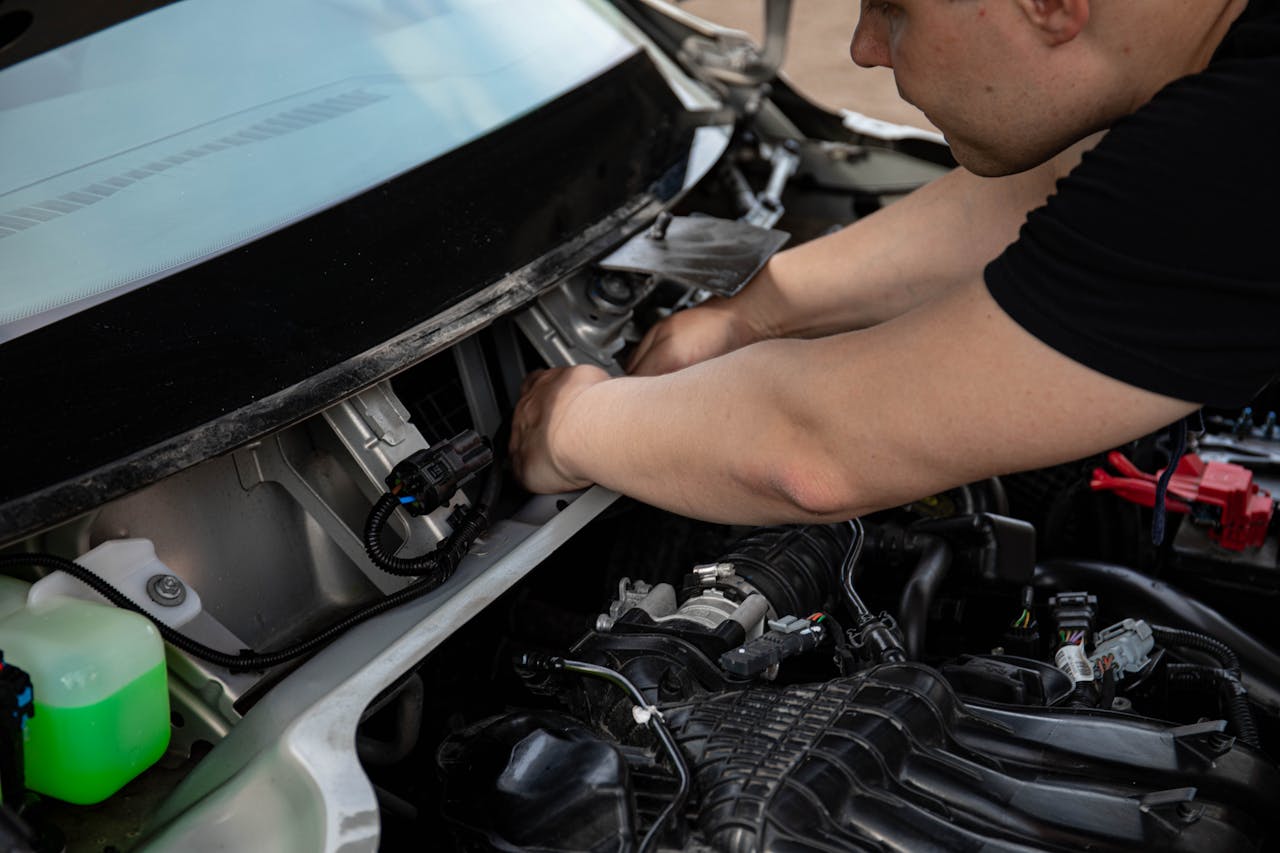
Dry ice cleaning’s safety profile is one of its biggest commercial advantages. No chemicals, no abrasive media, no water near electrical — combined with operator-friendly PPE requirements that don’t rule out tight working environments. Here’s a clear-eyed look at what’s safe and what isn’t.
Operator safety
Standard PPE for dry ice cleaning:
- Eye protection. Safety glasses minimum; full face shield for confined or high-pressure work. Pellet rebound is the main hazard.
- Hearing protection. The compressed-air discharge is loud — typically 90–100 dB at the nozzle. Earmuffs or earplugs always.
- Respiratory protection. P2/P3 mask for any cleaning that aerosolises particulate. Full SCBA for confined-space work where CO₂ accumulation is a risk.
- Skin protection. Long sleeves, gloves, closed-toe boots. The pellets at -78°C will give you an instant frost burn on bare skin.
- Hi-vis for outdoor or shared-site work.
Beyond PPE:
- CO₂ monitoring in confined or enclosed spaces. Threshold limits: 5,000 ppm 8-hour TWA, 30,000 ppm STEL.
- Forced ventilation in confined spaces — extraction or fresh-air supply.
- Ground-fault protection on the compressor’s power supply.
- Training and induction. Our crew is trained in CO₂ atmosphere management, pellet handling, and equipment-specific safety procedures.
Bystander and customer safety
For mobile auto detailing and most industrial work, bystander exposure is minimal. Standard practice:
- Working zone barriered or clearly marked.
- Compressed-air discharge directed away from foot traffic.
- For food production work, area cleared of staff during cleaning. ATP / sensory inspection before food production resumes.
- For confined-space work (vessel cleaning, tank cleaning), area access controlled.
Surface compatibility — what works
Cleans without surface damage
- Painted finishes (automotive, industrial, decorative) — including original paint, two-pack, powder coat
- Anodised aluminium
- Polished alloy (engine castings, billet parts)
- Plastic mouldings (loom covers, intake plenums, dashboard plastic)
- Stainless steel in all grades
- Galvanised steel
- Concrete (smooth and textured)
- Brick and masonry (modern and heritage)
- Sandstone, limestone, granite
- Hardwood and softwood timber (structural and finished)
- Gelcoat / GRP
- Composite panels
- PCBs and electronics (de-energised, isolated and proven dead only)
- Motor windings
- Switchgear copper busbars
- Decals, VIN plates, factory markings
Cleans with caution / pressure tuning
- Glass-lined reactor vessels (low pressure only)
- Heritage timber finishes (sample-test first)
- Soft heritage stone (sample-test first)
- Hand-painted artwork frames (specialist work only)
- Period rubber and decorative trims (low pressure)
Doesn’t clean / isn’t appropriate
- Already-flaking paint — will be pulled off (sometimes useful, often not)
- Rusted-through structural elements — needs replacement, not cleaning
- Paper and fabric — not the right tool
- Soft / friable stone past consolidation point — needs conservation work first
- Surfaces requiring chemical sanitisation only — e.g. CIP-validated pipelines
Pressure tuning per surface
We use a calibrated approach across surfaces:
| Surface | Typical pressure |
|---|---|
| Heritage stone | Up to ≈70 PSI, conservator sets the actual limit |
| Painted vehicle bodywork | 70–100 PSI |
| Engine bay (mixed surfaces) | 80–110 PSI |
| Industrial steel | 100–140 PSI |
| Heavy chassis / underbody | 120–160 PSI |
| Antifoul stripping | 100–110 PSI |
Sample-area testing on inconspicuous surfaces before full coverage is standard practice for any sensitive job.
Confined-space and CO₂ atmosphere
Dry ice cleaning is one of the few cleaning methods that has its own atmosphere consideration: CO₂ accumulation. In open spaces, irrelevant. In tanks, vessels, basements, small rooms — managed through:
- CO₂ monitor worn by operator
- Forced ventilation — extraction or fresh-air supply
- Buddy system — never solo confined-space work
- Permit-to-work — site safety case alignment
In normal production halls, warehouse interiors, garage bays, marina hard-stand and outdoor work — no special atmosphere management beyond the operator’s monitor.
Electrical safety
We do not blast energised equipment — that’s a WHS-regulation prohibition (model reg 154), not a house preference. Cleaning of electrical equipment is one of the more specialised dry ice applications, and done inside a proper isolation it shortens the shutdown rather than eliminating it. Procedures we work to:
- No isolation certificate, no blasting — a licensed electrical worker isolates, locks out and proves the equipment dead before we start
- Our own lock and tag on the isolation point, held by our operator
- Asset owner’s safety case — we work to your existing electrical safety procedures
- Risk assessment per asset, including backfeed sources (UPS, generator, solar, dual feed) and adjacent live sections, which are physically covered
- Arc-rated PPE — worn during isolation verification and around adjacent live sections
- High-voltage operator coordination — for MV+ equipment
- IR test — by the client’s electrician, before re-energisation, recorded for asset register
If the client will not shut down and isolate, we decline the work.
Storage and handling of dry ice pellets
A few practical notes for customers wondering about logistics:
- Pellets sublimate over time. Even in well-insulated containers, expect 5-10% loss per day.
- We bring exactly what we need for a given job — no leftover storage.
- Solid CO₂ at -78°C will frost-burn skin instantly. PPE always.
- Sealed containers + sublimation = pressure build-up. Never seal a container of dry ice pellets.
When to ask questions
If a provider is dismissive about:
- Sample-area testing on sensitive substrates
- Per-surface pressure tuning
- Documentation for restoration / compliance work
- Insurance certificates
- Confined-space atmosphere management
…ask more questions, or find a different provider. Process discipline matters in this work.
How to engage
For service-specific safety detail — particularly for restoration, electrical or food production work — see the relevant service page or industry guide. For specific technical questions, send us a brief.