Heritage Sandstone Facade — Graffiti Removal Without Stone Damage
A worked example of how graffiti tags on a heritage-listed sandstone facade would be removed without acid wash or pressure washing. Illustrative, not a completed job.
A worked example of how graffiti tags on a heritage-listed sandstone facade would be removed without acid wash or pressure washing. Illustrative, not a completed job.
The brief
A typical brief in this category: a heritage-listed sandstone facade hit by spray-paint taggers, with several tags across roughly 40m² of weathered sandstone. Council heritage rules generally prohibit acid wash, pressure washing or chemical strippers on listed stonework, and a conservator’s advisory for this kind of surface would usually point to dry ice or, at much greater cost, chip-and-replace stone.
Engagement on a job like this would typically start with a sample-area test request from the heritage architect — standard process for listed work.
How the work would run
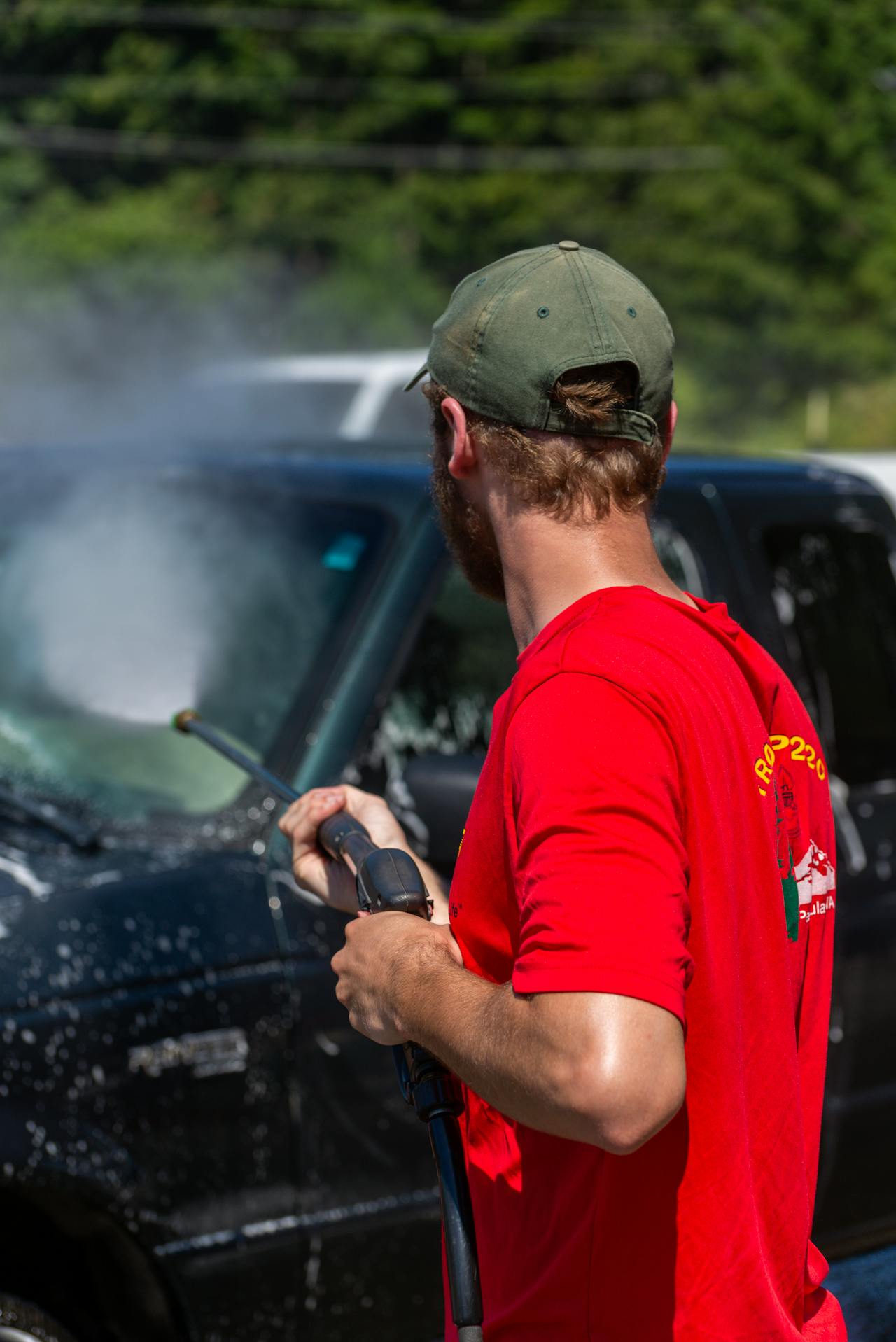
Sample test. Before any work is scoped, a small sample area — around 0.5m² — would be run on an inconspicuous lower corner, with the conservator and heritage architect on site to inspect. Pressure would be tuned around 50-60 PSI with a 60-degree fan nozzle. On sandstone, paint typically lifts while the stone surface stays unmolested at this pressure range — sign-off would be sought before the main work proceeds.
Main work. Tags would be worked in sequence, using a lower-pressure technique throughout. Heritage stone is generally more forgiving than paint or steel for this kind of cleaning, but the surface texture has to be preserved exactly.
Documentation. Pre/during/post photos at every 1m² grid square would be standard, with the conservator typically visiting once during the work and once at sign-off.
What a job like this typically delivers
In a scenario like this, the expectation is that tags remove cleanly with no ghosting visible from a normal viewing distance, and that on close inspection the original sandstone weathering pattern and mortar joints stay intact. A documentation pack of this kind is what supports heritage architect sign-off and council records.
This is the kind of work we’re set up to deliver for council heritage cleaning panels and conservation architects — the documentation discipline matters as much as the cleaning technique, and any specific outcome claim for a real job would need to come from that job’s own sign-off record, not this illustrative example.
Want similar work for your project?
Tell us what you need cleaned. We come back with a fixed quote within 24 hours — and an exact estimate range while you wait.
Or talk to us directly
- 02 5302 6367
- office@dryiceblasters.com.au
- Mon–Fri 7am–6pm · Sat 8am–2pm · Sun by appointment
About this scenario. Dry Ice Blasters launched in 2026. This piece illustrates how a typical graffiti removal job runs — drawn from industry-standard work patterns, our team's prior operator experience and equipment specs. Process, scope and outcomes reflect what you can expect when you book us. Documented customer jobs are marked "Case study" on the projects page.